
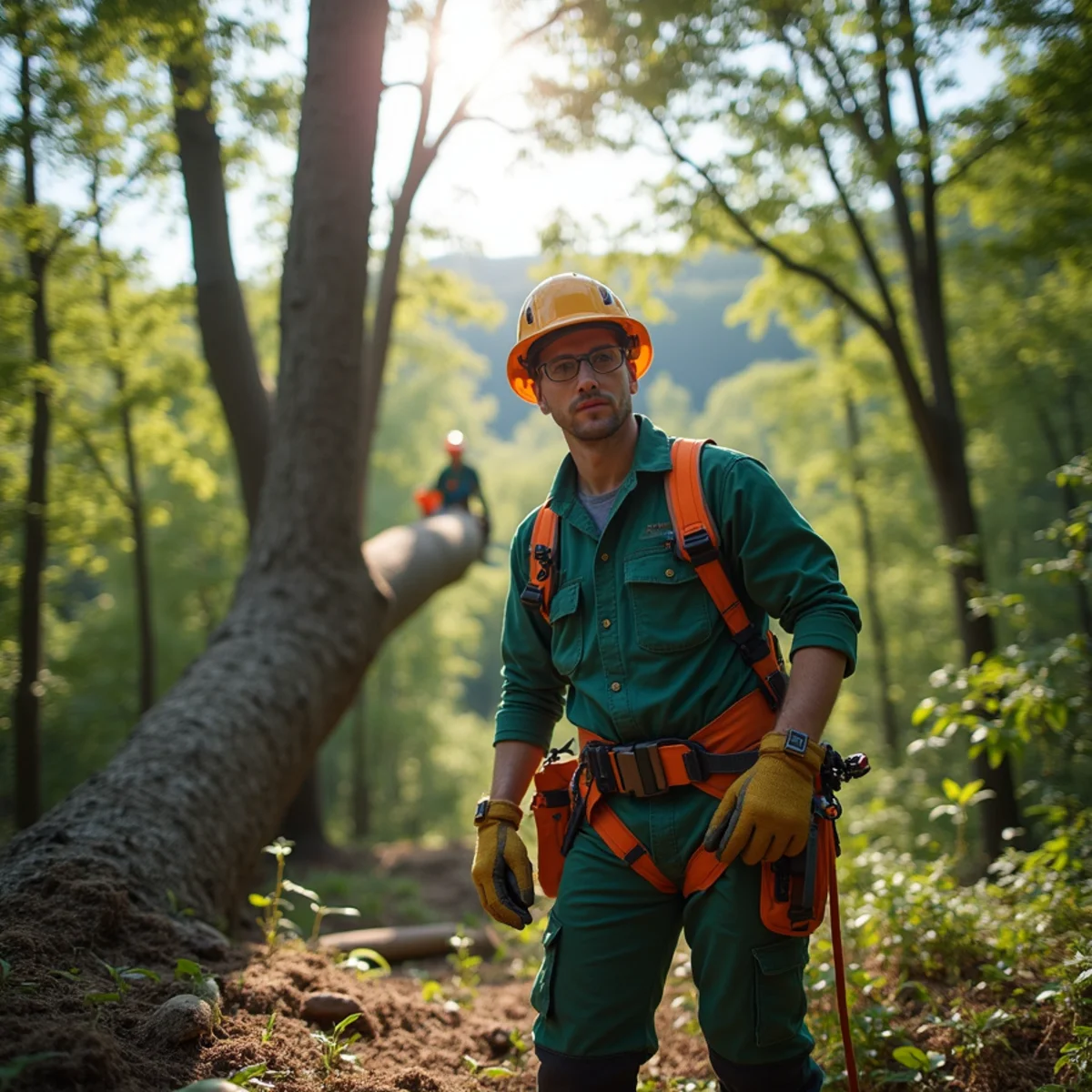
Leaning Tree After Heavy Rain: When Is It an Emergency?
24/7 Emergency Dispatch
Immediate storm & hazard tree response
Serving Since 2021
NC LLC #2158995 · Fully Insured
4.4★ Google Rating
35+ verified homeowner reviews
Zero Yard Damage Rigging
Controlled rope descent · No heavy ruts
Burke County Local
Headquartered in Morganton, NC
Saturated Soil Mechanics in Western NC: How Cecil Red Clay Loses Cohesion Under Torrential Rain
When a mature hardwood or pine begins visibly leaning across your property following prolonged mountain rainfall, you are witnessing an urgent geotechnical and structural emergency. In Western North Carolina and the foothill region around Morganton, the underlying soil dynamics play a decisive role in tree stability. Understanding how regional clay soils interact with water reveals why trees topple suddenly after severe storms.
The predominant soil type across Burke, Caldwell, and Catawba counties is Cecil clay loam, an ancient Piedmont Ultisol characterized by weathered red clay subsoils. In dry or moderately moist conditions, Cecil clay exhibits high shear strength and cohesion, acting almost like soft concrete that firmly anchors massive hardwood root plates. However, when tropical weather systems, atmospheric rivers, or prolonged convective storms dump 4 to 8 inches of rain over several days, the physical state of the clay undergoes a catastrophic phase transition.
Clay soils have extremely small pore sizes and low permeability. As water percolates downward and encounters dense subsoil hardpans, the clay particles become completely saturated, expanding and turning into a slick, plastic lubricant. The frictional bond between tree roots and soil particles disintegrates. Under the immense gravitational deadweight of a waterlogged canopy, the lateral root plate loses its mechanical purchase, allowing the entire tree to tilt off vertical alignment.
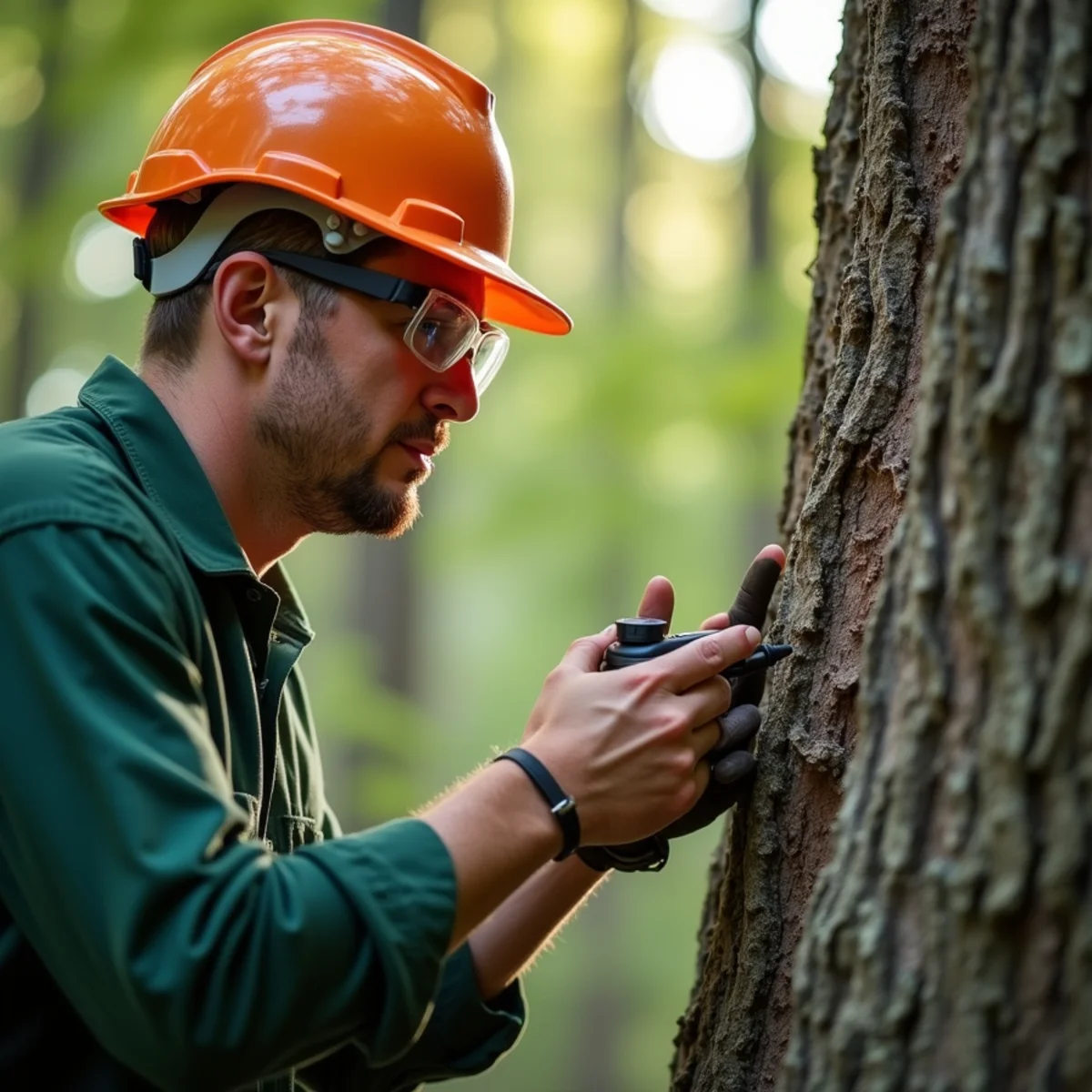
Differentiating Natural Phototropic Growth Leans vs. Acute Storm Failure Leans
Not every leaning tree represents an immediate structural emergency. Homeowners must be able to accurately distinguish between a harmless, gradual phototropic growth lean and an acute mechanical failure caused by storm saturation.
A phototropic lean develops gradually over decades as a young tree reaches outward toward sunlight, often curving away from a larger neighboring canopy or building roofline. Key visual indicators of a benign growth lean include a pronounced compensatory curve in the trunk—where the lower bole leans but the upper leader curves back toward the vertical center of gravity—and a well-developed, symmetrical root flare that shows no signs of ground disturbance or root breakage. The tree has adapted its wood density and tension fibers to balance the angled canopy.
Conversely, an acute storm failure lean occurs suddenly following rainfall or high winds. Key diagnostic indicators of an emergency storm lean include a straight trunk that tilts as a single rigid column, a freshly exposed gap or soil fracture on the side opposite the lean, and mounded, lifted sod revealing snapped anchor roots. If you see fresh, unweathered roots exposed to the air or soil mounding like an opening trapdoor, the root plate is in active failure and the tree is teetering on the verge of complete collapse.
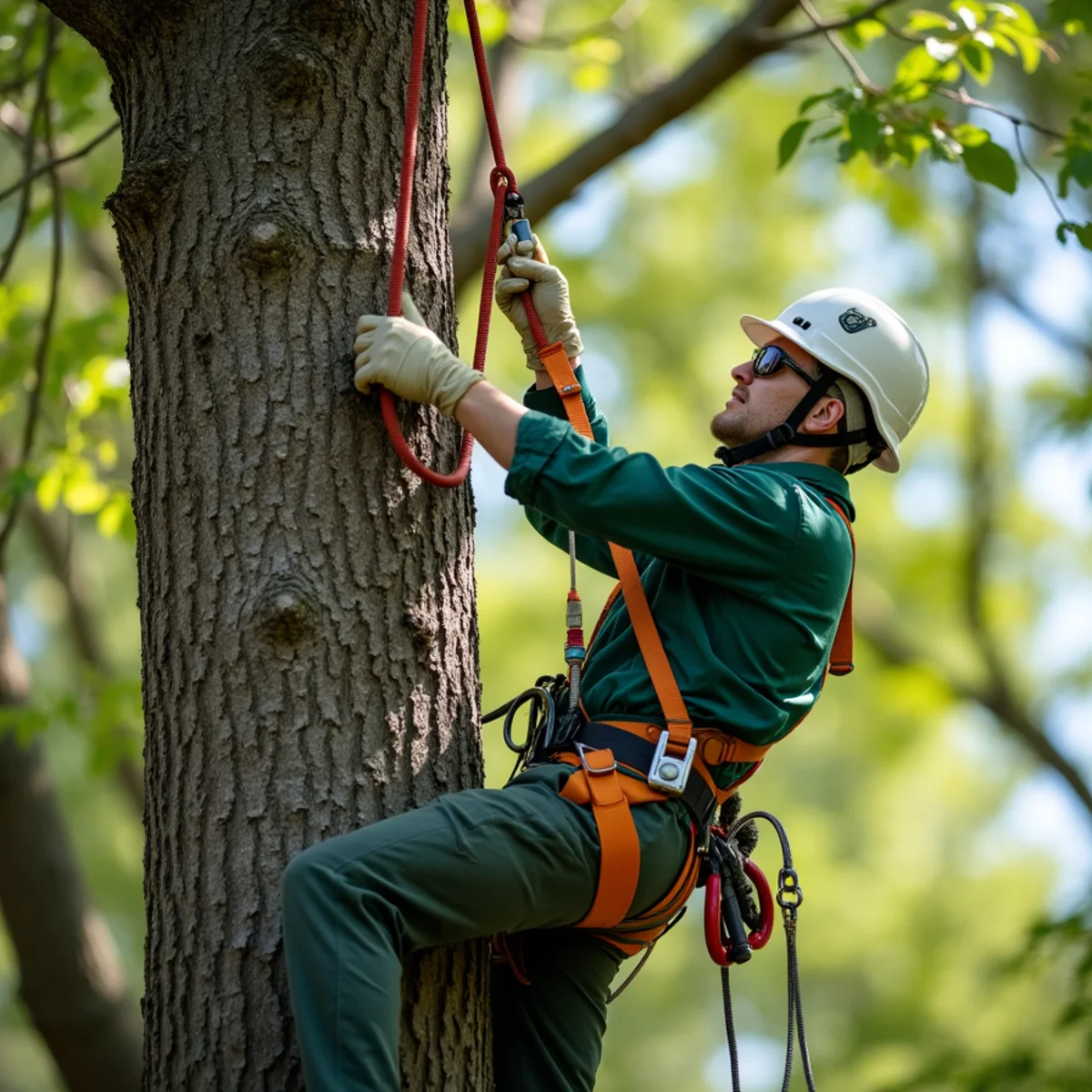
The Root Plate Pivot Point & Measuring Acute Angular Deflection
To evaluate the immediate danger posed by a leaning tree, arborists analyze the mechanics of the root plate pivot point. A falling tree does not slide across the ground; it rotates on an axis located on the compression side of the root flare, right at the soil-trunk interface.
As the tree tilts toward the lean, the roots on that side are jammed into extreme compressive stress against saturated clay, while the roots on the opposite side (the tension side) are pulled upward out of the ground. The tensile strength of oak, hickory, and pine roots is substantial, but once the primary lateral anchor roots snap, the remaining rotational resistance drops exponentially. The tree's center of gravity shifts further outside its base of support, increasing the downward lever arm.
Homeowners can monitor active movement from a safe vantage point. Sight along the trunk against a fixed vertical reference point, such as a neighbor's roof corner, a chimney, or a utility pole. If the tree continues to tilt over hours or days under completely calm winds, the remaining root structure is failing progressively under static load. Even an angular shift of 5 to 10 degrees on a mature 70-foot tree shifts tens of thousands of pounds of gravitational force directly toward target structures.
Calculating Target Zones & Establishing Immediate Life Safety Perimeters
When a tree is actively leaning after heavy rain, the immediate priority is establishing an uncompromising exclusion zone. A common fatal mistake is underestimating how far a falling tree's canopy can reach, or assuming a leaning trunk will fall strictly in the direction of its visible tilt.
To determine the critical strike zone, calculate the potential target radius as equal to at least 1.5 times the total height of the tree. For a mature 70-foot oak or tulip poplar, the exclusion zone must extend a full 105 feet in an arc extending from the lean direction. This safety buffer accounts for rotational deflection—if the trunk twists as it pivots or strikes a secondary tree on the way down—and the explosive kinetic trajectory of splintered top branches that shatter upon ground impact.
Immediately evacuate all family members and pets from living spaces within the target arc. Do not park vehicles in driveways beneath the lean, and do not attempt to retrieve patio furniture or lawn equipment from the drop zone. If the tree leans toward overhead power distribution lines along the street, call your utility provider and keep everyone at least 50 feet away to prevent deadly step potential electrocution if anchor roots shear adjacent utility poles.
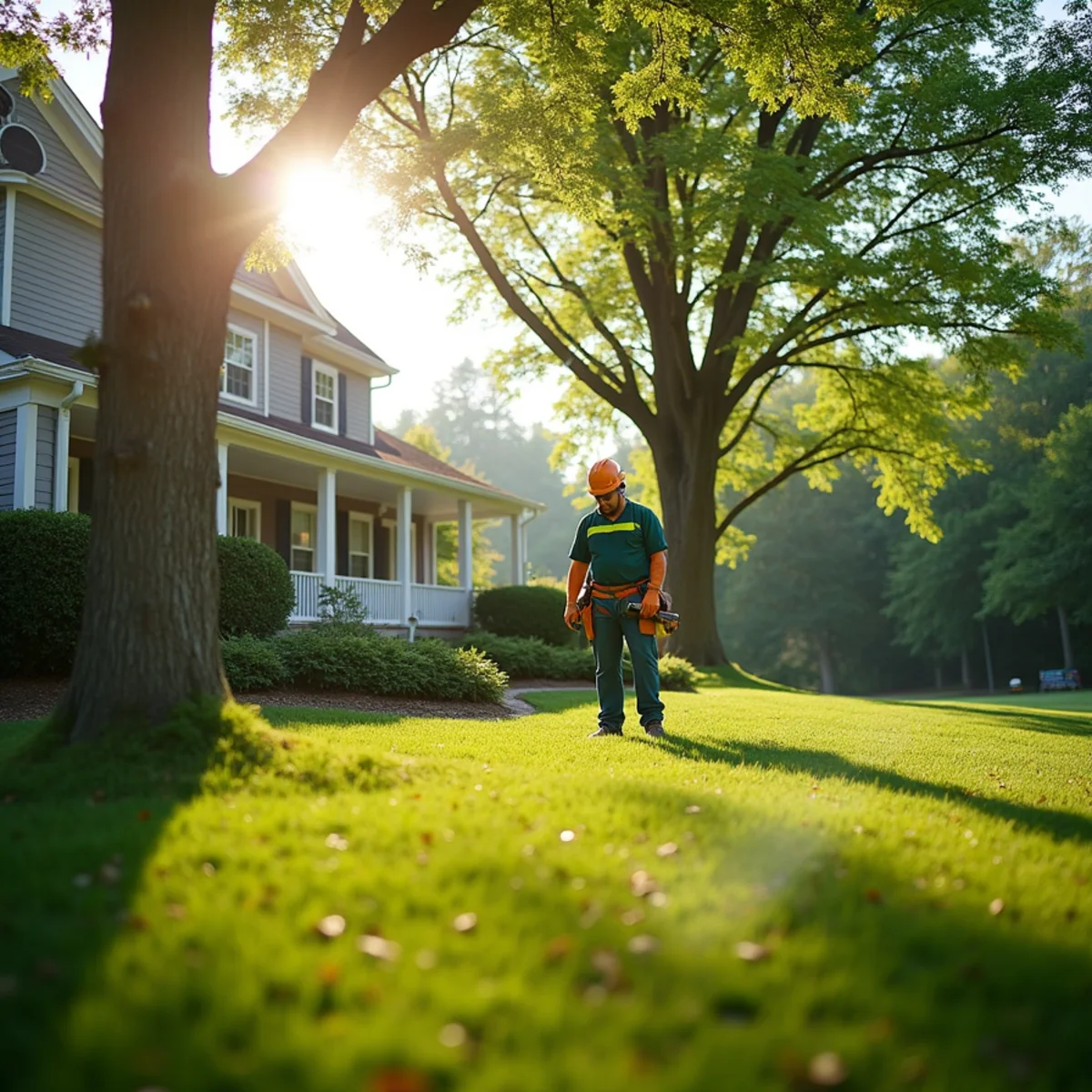
Low-Impact Mechanical Rigging on Saturated Soils: Why Heavy Boom Cranes Fail
Safely removing an actively leaning, waterlogged tree on saturated red clay demands specialized arborist rigging rather than brute industrial machinery. Inexperienced contractors who attempt to drive heavy equipment onto soaked foothill lawns frequently trigger catastrophic site damage.
A standard commercial bucket truck or mobile hydraulic crane weighs between 35,000 and 70,000 pounds. Driving multi-axle heavy vehicles across waterlogged Cecil red clay exerts massive ground pressure that instantly liquefies the subsoil. Outriggers can punch through saturated turf, puncturing septic drain fields, crushing plastic sewer lines, and cracking residential concrete driveways. Worse, the vibration of heavy machinery moving near the tree can shake the compromised root plate, triggering the very collapse the crew was called to prevent.
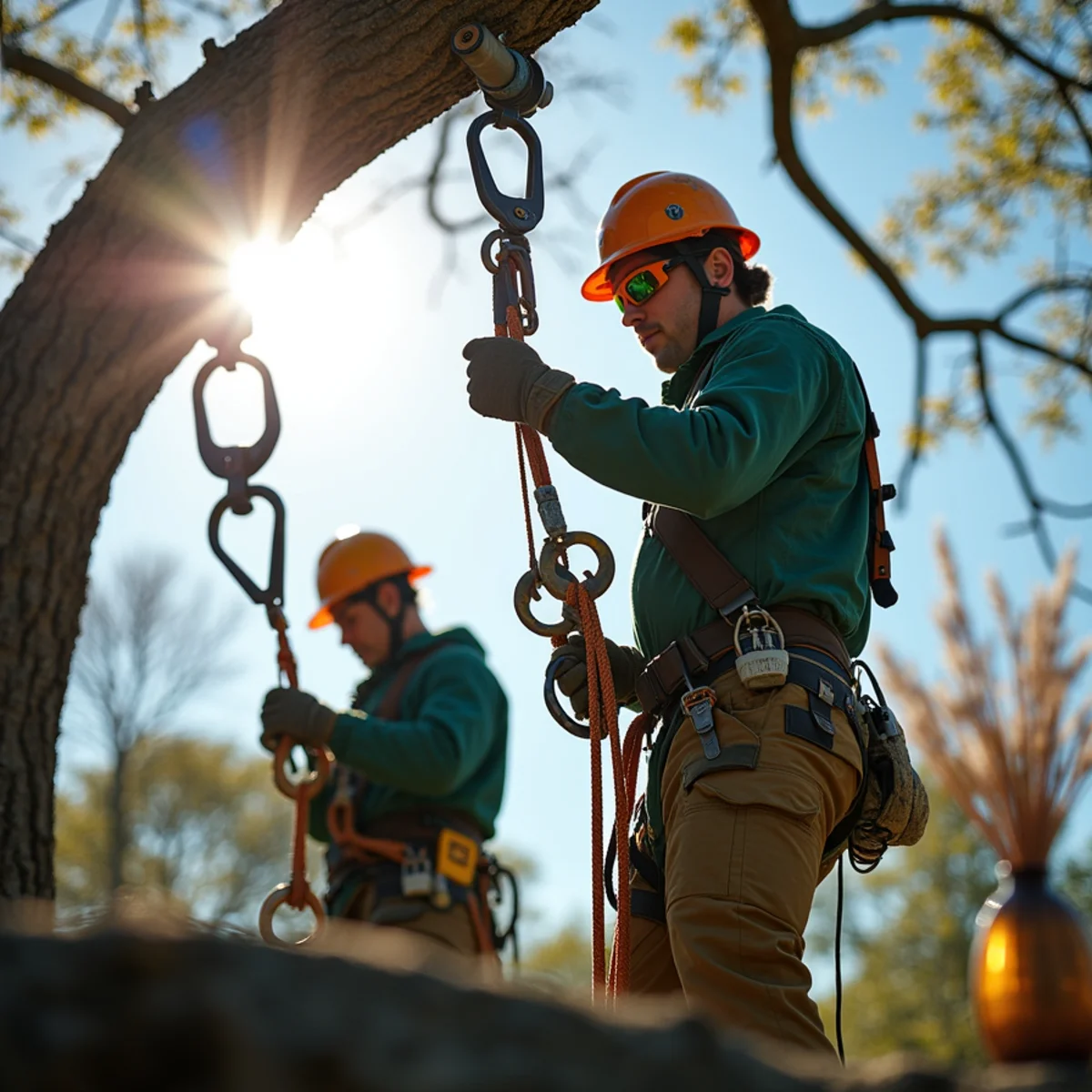
RAM Tree Service LLC (NC LLC #2158995) solves this crisis through technical climbing and remote rigging. Lead climber Ron Martin ascends using static arborist lines set in adjacent stable timber or accesses the leaning crown using low-impact climbing spikes if the tree is slated for full extraction. Working aloft, Ron rigs high-strength synthetic bull lines through overhead pulleys, allowing ground specialist Buddy to counter-balance the leaning load using an anchored Port-a-wrap friction brake. Timber is methodically dismantled from the top down and lowered smoothly into designated drop zones without rutting saturated lawns.
Long-Term Soil Drainage, Crown Reduction & Whole-Property Arborist Inspections
Once the immediate hazard of a leaning tree has been neutralized, proactive homeowners must address the environmental root causes that allowed the failure to occur. Saturated soil failures are rarely isolated incidents; they reflect systemic drainage patterns across the property that threaten surviving canopy trees.
Inspect the topography around remaining mature shade trees. Downspout extensions that dump concentrated roof runoff directly onto tree root flares should be redirected into subterranean drain pipes or swales leading away from canopies. Compacted red clay yards benefit from deep-root decompaction, radial trenching, or air-spading, which incorporates organic compost into the upper soil horizon to improve water infiltration and encourage deeper, more resilient root development.
Furthermore, surviving mature hardwoods with heavy, spreading crowns can be safeguarded against future storm saturation through ANSI A300 crown reduction and canopy thinning. Selectively removing up to 15–20% of interior foliage reduces wind drag, while end-weight reduction on long lateral limbs decreases the leverage exerted on the root plate during torrential downpours. Contact RAM Tree Service LLC at (213) 468-5153 to book an on-site post-storm arborist evaluation.
Recommended Arborist Services & References:

About the Author: Ron Martin, RAM Tree Service LLC
Ron Martin is the owner and lead climber at RAM Tree Service LLC in Morganton, NC. Dedicated to proper arboriculture, rigging physics, and protecting client lawns from heavy machine ruts, Ron has guided Burke County property owners through routine prunings and catastrophic post-Helene storm recoveries.
More Tree Care Guides & Advice
What to Do When a Tree Falls on Your House in Burke County
What to do when a tree falls on your house in Burke County, NC: immediate safety, utility shutoffs and insurance photos. Call (213) 468-5153 today.
Tree on a Power Line in Morganton: Who to Call First
Tree on a power line in Morganton, NC? Learn whether to call Duke Energy, city electric or an arborist first. For tree triage, call (213) 468-5153.
Tree Removal Cost in Morganton, NC: 2026 Price Guide
Realistic tree removal costs in Morganton, NC: tree size, access, rigging factors and typical Burke County price ranges. Call (213) 468-5153 today.
Facing an Active Tree Emergency in Burke County?
Tree on your roof, power line, vehicle, or blocking a private drive? Our climbing and rigging crew is standing by 24/7 across Morganton and the foothills.
Frequently Asked Questions
Direct, transparent answers regarding tree work, rigging methods, insurance documentation, and scheduling.
If a mature shade tree has tilted suddenly due to root plate failure in saturated soil, it cannot be safely straightened or cabled. When a mature root plate tears free from the clay, primary structural anchor roots snap, destroying the tree's mechanical stability and vascular plumbing. Straightening large mature trees creates an ongoing fall liability. Complete removal is the safest path forward. Only young saplings under 15 feet can typically be re-staked and saved.
Our Morganton, NC Base of Operations
Centrally positioned on Old Hickory Tree Road in Morganton to quickly dispatch climbing crews, bucket-free rigging gear, chippers, and emergency response teams across Burke, Caldwell, McDowell, and Catawba counties.
Ready for an Honest, On-Site Tree Service Estimate?
Climbers who rope-lower limbs to protect your yard, stone walls, and roofs. Call Ron & the RAM Tree Service team directly.