Tree Trimming Cost in Morganton: Pricing by Tree Size
24/7 Emergency Dispatch
Immediate storm & hazard tree response
Serving Since 2021
NC LLC #2158995 · Fully Insured
4.4★ Google Rating
35+ verified homeowner reviews
Zero Yard Damage Rigging
Controlled rope descent · No heavy ruts
Burke County Local
Headquartered in Morganton, NC
Average Tree Trimming Costs in Morganton & Burke County: 2026 Price Overview
Regular arborist trimming is the single most effective investment a Western North Carolina homeowner can make to preserve tree longevity, prevent storm damage, and protect residential structures from limb strikes. When budgeting for tree trimming in Morganton and Burke County, understanding typical pricing tiers helps property owners plan seasonal maintenance with confidence and avoid unexpected repair expenses.
In 2026, tree trimming costs for residential properties generally fall within three clear service categories: - Routine Maintenance & Crown Elevation (Small to Medium Trees): Pruning lower branches to clear walkways, driveways, or sight lines on trees under 35 feet typically ranges from $200 to $450 per tree. This includes selective deadwood removal and light interior thinning. - Structural Crown Pruning (Large Mature Hardwoods): Comprehensive pruning on mature 40- to 75-foot oaks, maples, or poplars generally costs between $500 and $1,200. These jobs require an experienced climbing arborist aloft to perform high-canopy deadwood extraction, end-weight reduction over roofs, and structural wind thinning. - Complex Hazard Clearance (Large Trees Overhanging Structures & Lines): Large, overextended hardwoods with heavy boughs overhanging slate roofs, detached garages, or service drops range from $900 to $1,800+. These projects require precision rope friction rigging to lower heavy wood safely without impacting homes.
The 4 Core Pruning Methods: Cleaning, Thinning, Raising & Reduction
Professional arboriculture does not rely on arbitrary cutting; instead, certified tree surgeons apply standardized pruning techniques established by the American National Standards Institute (ANSI A300 standards). Each method addresses specific biological and structural needs while protecting the tree's natural defense barriers:
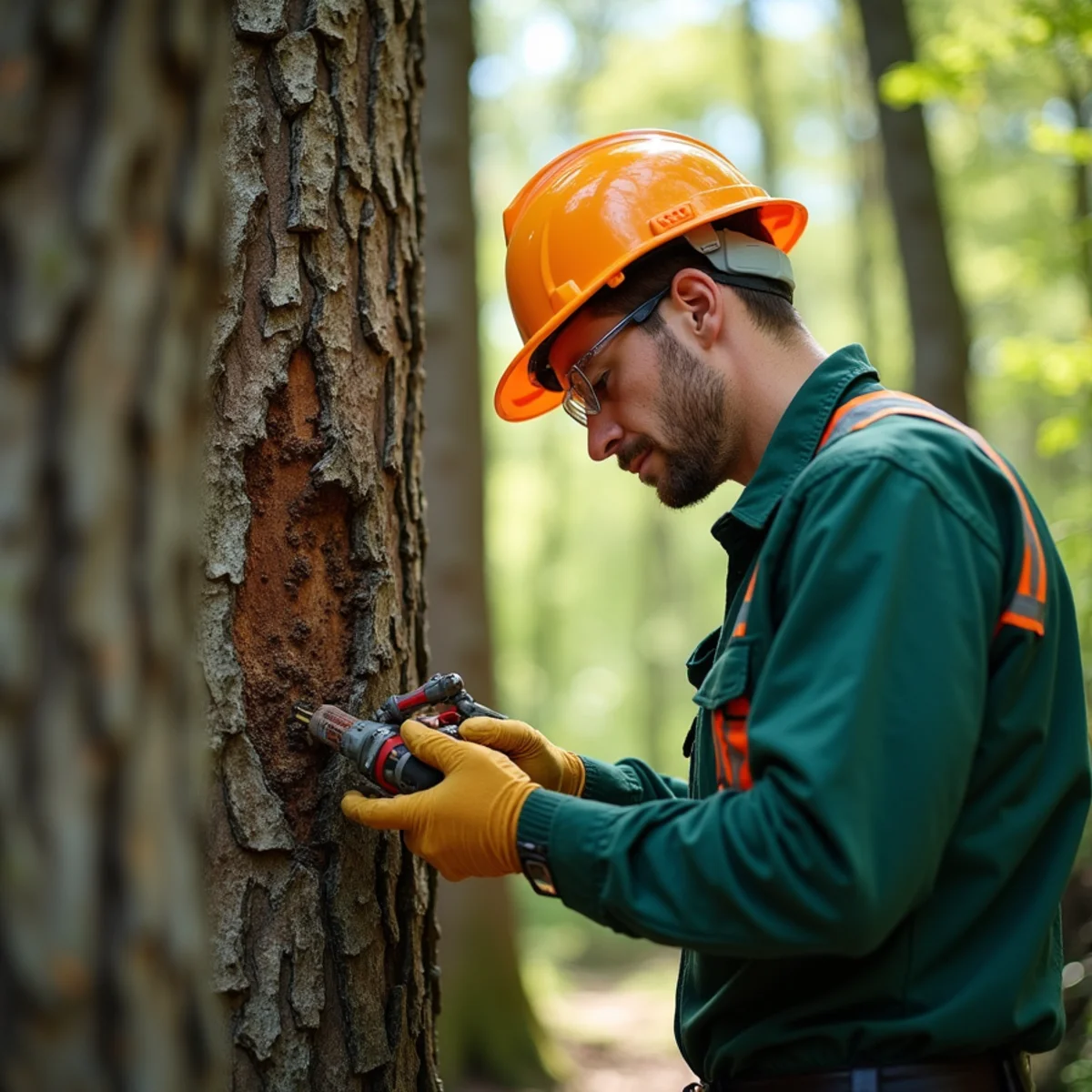
1. Crown Cleaning: The systematic removal of dead, dying, diseased, and weakly attached branches throughout the entire canopy. Eliminating deadwood deprives wood-boring beetles and fungal rot of host material while preventing heavy dead limbs from crashing onto yards below during summer squalls. 2. Crown Thinning: Selectively pruning up to 15–20% of live interior secondary branches to reduce canopy density. Thinning opens the crown to increased air movement and sunlight penetration, significantly reducing aerodynamic wind drag during severe foothill thunderstorms and lowering humidity levels that foster leaf fungal diseases. 3. Crown Raising: The selective removal of lower branches to provide vertical clearance over residential driveways, pedestrian sidewalks, building roofs, and municipal street traffic. Standard clearance targets are typically 8 feet over walkways and 14 feet over vehicular access lanes. 4. Crown Reduction: Methodically shortening the outer length of overextended scaffold limbs extending over roofs, gutters, and chimneys. By reducing branch end-weight, arborists relieve gravitational stress on branch crotches, preventing limb fractures during winter snow and ice storms.
The Disastrous Practice of 'Tree Topping' vs. Proper ANSI A300 Reduction
Homeowners in Morganton seeking to reduce the height of large shade trees frequently encounter unqualified contractors offering to "top" their trees. Tree topping—often deceptively marketed as "dehorning," "heading," or "stubbing"—is the indiscriminate, flat-cut amputation of large structural branches between nodes. It is recognized across the arboricultural industry as an act of severe tree mutilation that permanently damages tree health.
Topping inflicts catastrophic biological damage on a mature tree: - Starvation & Shock: Amputating the upper crown removes 50% to 100% of the tree's leaf canopy, depriving the tree of its food manufacturing capacity and causing root system starvation. - Sunscald & Internal Decay: Stripping the protective foliage exposes sensitive trunk bark to scorching sunlight, inducing bark death. The large, flat wounds cannot form defensive callus wood (CODIT failure), allowing heartwood rot fungi to enter the trunk core. - Weak Epicormic Regrowth: In panic, the mutilated tree expels hundreds of fast-growing water sprouts. These sprouts are weakly attached to the outer sapwood bark rather than anchored in structural heartwood. Within two to three years, these dense sprouts grow taller than the original canopy, creating brittle, storm-vulnerable limbs that snap easily under mountain winds.
Seasonal Pruning Calendars in Western North Carolina: Timing by Species
The timing of tree pruning in Burke County directly impacts tree recovery, sap flow, and resistance to regional pests. While hazardous deadwood can and should be safely pruned at any time of year, pruning live canopy branches should follow an arborist seasonal calendar to maximize wound compartmentalization:
Dormant Season Pruning (Late Winter: December to February): The dormant winter months are the ideal window for structural pruning on most native Appalachian deciduous hardwoods, including red and white oaks, sugar maples, and hickories. Pruning while trees are dormant minimizes sap loss, eliminates risk of insect attraction, and provides the climber with a completely unobstructed view of branch architecture, bark cracks, and structural crotches. Furthermore, oaks must strictly be pruned during winter dormancy to prevent the spread of Oak Wilt disease (Ceratocystis fagacearum), which is carried by sap beetles attracted to fresh spring pruning wounds.
Spring & Summer Pruning (Flowering & Light Maintenance): Spring-flowering trees like dogwoods, redbuds, and ornamental cherries should be pruned immediately after their spring floral bloom to avoid removing dormant flower buds. Light summer pruning can be performed on fast-growing species like crepe myrtles to shape canopies and eliminate aggressive water sprouts.

Low-Impact Climbing vs. Heavy Machinery: Preserving Residential Turf & Rooflines
When selecting a tree trimming service in Morganton, property owners must evaluate how the contractor plans to access the canopy. Many commercial tree outfits rely on 40-ton bucket trucks that require wide access corridors and drive heavy outriggers into residential yards, rutting soft red clay and risking damage to underground septic tanks and buried pipes.
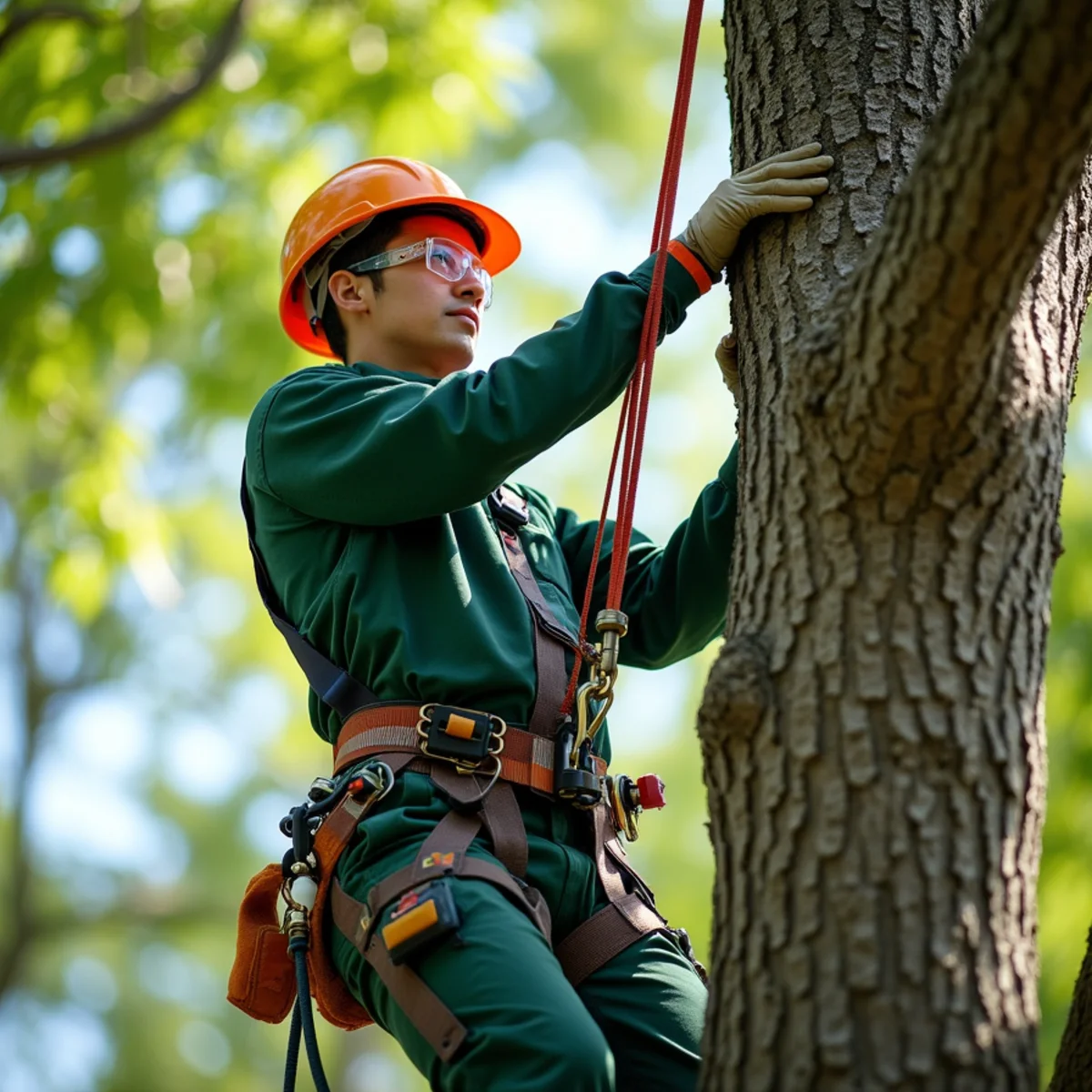
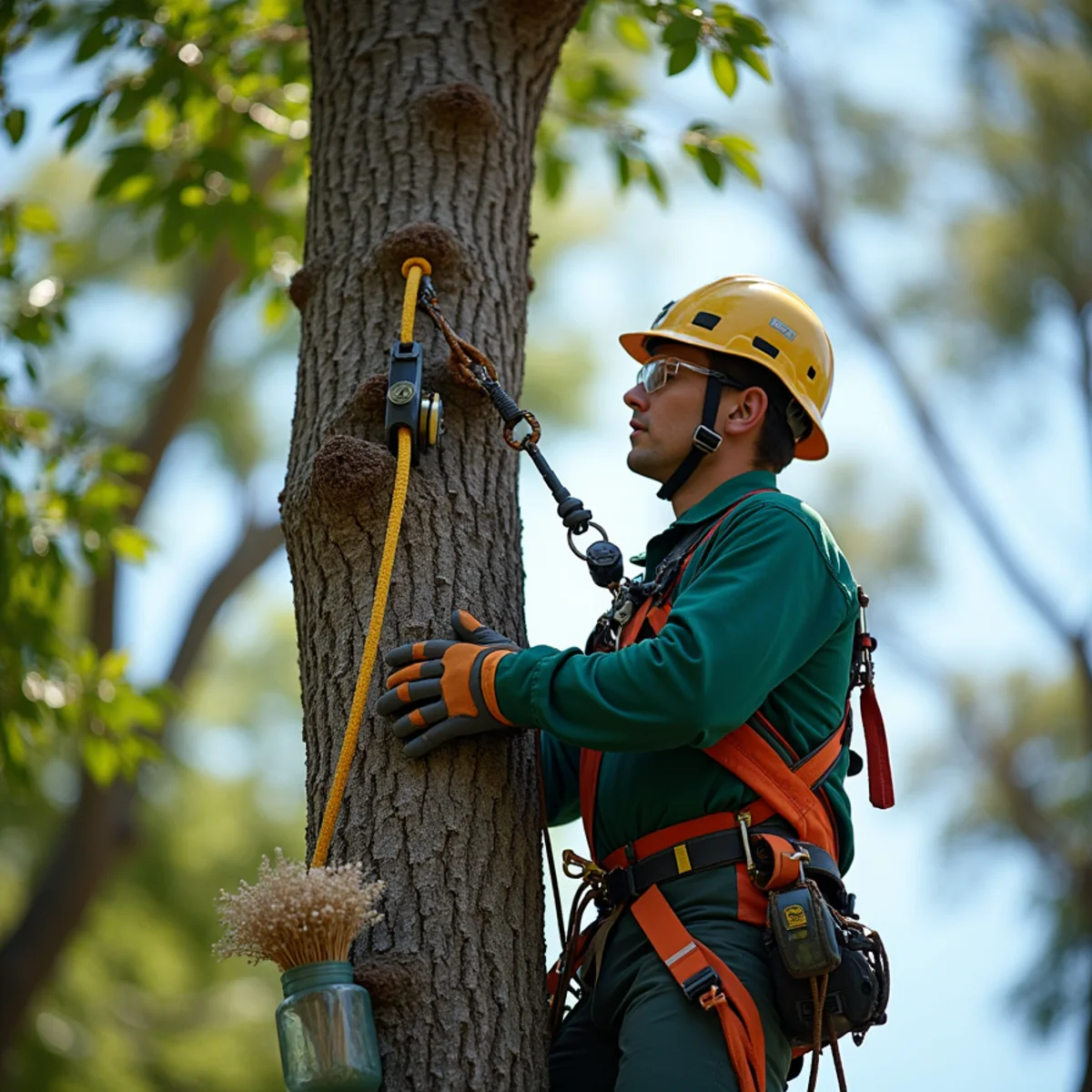
RAM Tree Service LLC (NC LLC #2158995) prioritizes a low-impact, climbing-first philosophy. Owner and lead climber Ron Martin accesses the tree canopy directly using arborist life lines, friction savers, and non-invasive ascenders. Working aloft without climbing spikes on live pruning jobs (which damage living cambium and spread fungal pathogens), Ron navigates the inner and outer crown with surgical precision.
Every branch pruned over roof shingles, sunrooms, or garden fencing is secured with synthetic bull lines. Ground specialist Buddy manages the lowering through an anchored Port-a-wrap friction brake, decelerating heavy boughs smoothly in mid-air and guiding them softly into designated drop zones. Turf protection runners prevent lawn gouging during brush transport, ensuring your grounds remain immaculate.
What to Look for in a Trimming Proposal & Scheduling Your Free On-Site Consultation
A professional tree trimming proposal should be transparent, comprehensive, and detailed in writing before any cutting begins. Avoid vague estimates that simply state "trim trees." A proper proposal from RAM Tree Service LLC specifies the exact species to be pruned, the specific techniques to be applied (such as deadwooding to 2-inch diameter, 8-foot crown elevation, or 20% interior thinning), and guarantees complete debris cleanup and brush chipping.
North Carolina homeowners should always verify active commercial liability insurance and state corporate standing before hiring a tree care provider. RAM Tree Service LLC is registered in full compliance with North Carolina authorities (NC LLC #2158995) and carries specialized liability coverage tailored specifically for high-climbing arborist operations, ensuring complete protection for homeowners.
We provide 100% free, no-obligation on-site arborist evaluations across Morganton, Valdese, Hickory, and surrounding Burke County communities. Owner Ron Martin personally evaluates your trees, explains the trimming options, and delivers a transparent written estimate. Call our local team at (213) 468-5153 to schedule your consultation today.
Recommended Arborist Services & References:
About the Author: Ron Martin, RAM Tree Service LLC
Ron Martin is the owner and lead climber at RAM Tree Service LLC in Morganton, NC. Dedicated to proper arboriculture, rigging physics, and protecting client lawns from heavy machine ruts, Ron has guided Burke County property owners through routine prunings and catastrophic post-Helene storm recoveries.
More Tree Care Guides & Advice
What to Do When a Tree Falls on Your House in Burke County
What to do when a tree falls on your house in Burke County, NC: immediate safety, utility shutoffs and insurance photos. Call (213) 468-5153 today.
Tree on a Power Line in Morganton: Who to Call First
Tree on a power line in Morganton, NC? Learn whether to call Duke Energy, city electric or an arborist first. For tree triage, call (213) 468-5153.
Leaning Tree After Heavy Rain: When Is It an Emergency?
Is a leaning tree after heavy rain an emergency in Morganton, NC? Root plate heaving, saturated clay and hazard triage. Call (213) 468-5153 today.
Facing an Active Tree Emergency in Burke County?
Tree on your roof, power line, vehicle, or blocking a private drive? Our climbing and rigging crew is standing by 24/7 across Morganton and the foothills.
Frequently Asked Questions
Direct, transparent answers regarding tree work, rigging methods, insurance documentation, and scheduling.
Trimming and elevating a large mature oak tree (50 to 70+ feet tall) to clear a roofline in Morganton typically costs between $450 and $950. The price depends on branch diameter, canopy spread, and the necessity of controlled rope friction rigging to lower limbs safely without touching roof shingles or gutters. We provide free written quotes.
Our Morganton, NC Base of Operations
Centrally positioned on Old Hickory Tree Road in Morganton to quickly dispatch climbing crews, bucket-free rigging gear, chippers, and emergency response teams across Burke, Caldwell, McDowell, and Catawba counties.
Ready for an Honest, On-Site Tree Service Estimate?
Climbers who rope-lower limbs to protect your yard, stone walls, and roofs. Call Ron & the RAM Tree Service team directly.